

Why Carbon Literacy Matters More Than Ever
Climate change is impossible to ignore. However, many organisations still struggle to turn awareness into meaningful action. That is exactly why Carbon Literacy is becoming so essential for sustainability leaders.
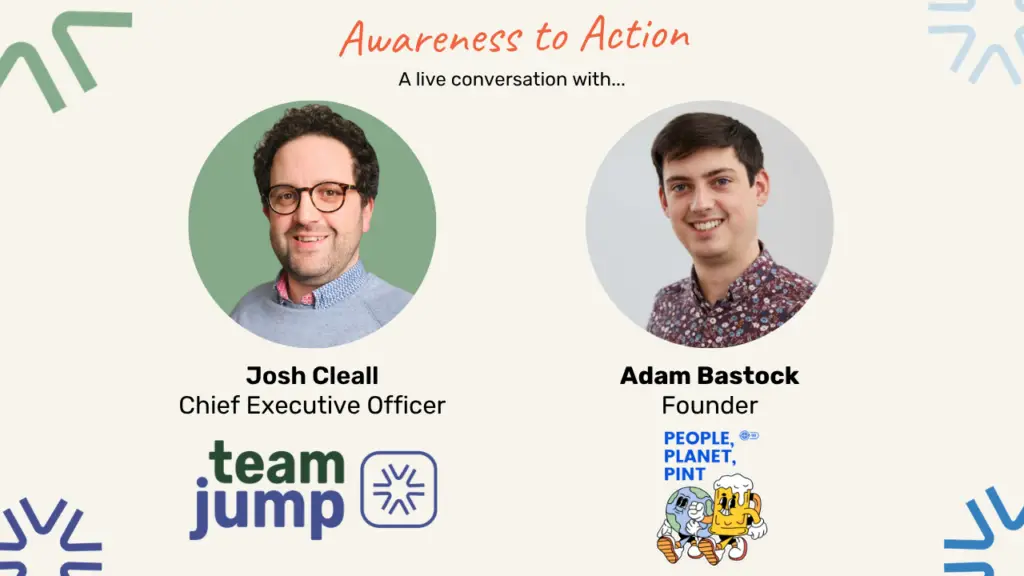
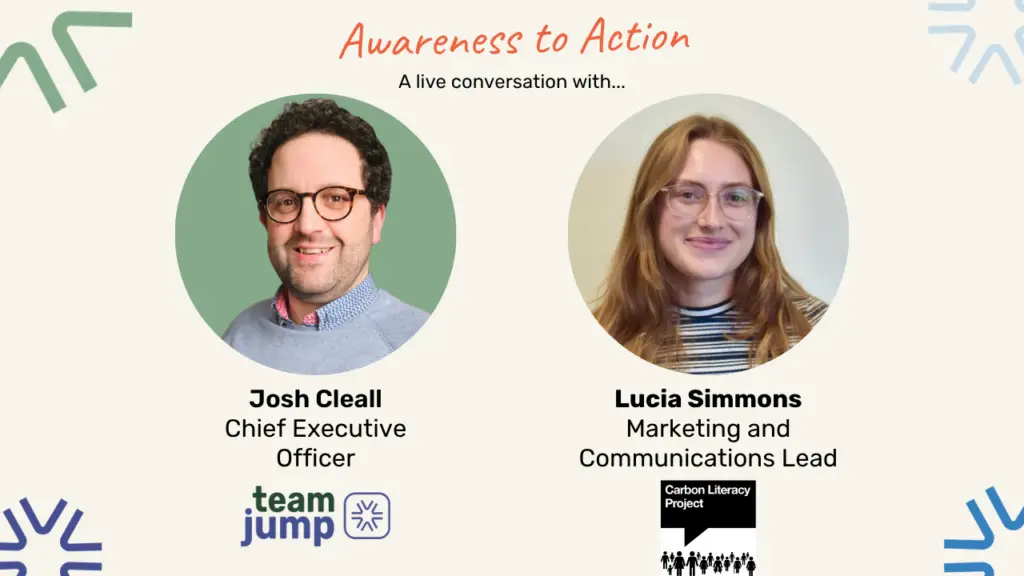
In our latest Awareness to Action LinkedIn Live, Josh sat down with Lucia Simmons, Marketing and Communications Lead at The Carbon Literacy Project, to discuss how organisations can empower people, build lasting behaviour change, and create cultures where sustainability becomes part of everyday decision making.
Carbon Literacy Creates the Motivation to Act
Many people understand that climate change is happening. Yet awareness alone rarely drives behaviour change.
During the discussion, Lucia explained that Carbon Literacy goes beyond education. It equips people with the knowledge, skills and confidence needed to reduce emissions in their daily lives and workplaces. Crucially, every learner commits to practical actions that they can implement immediately.
This focus on action helps close the gap between understanding climate change and doing something about it. It also aligns closely with our approach at Team Jump, where we use gamification and engagement programmes to help people build sustainable habits that last.
As Lucia highlighted, lasting change happens when individuals feel they have the agency to make a difference. Once people believe their actions matter, they are far more likely to contribute to wider organisational goals.
How Carbon Literacy Strengthens Sustainability Culture
One of the strongest themes from the livestream was the role Carbon Literacy can play in building organisational culture.
Rather than placing sustainability responsibility on a small group of passionate individuals, Carbon Literacy helps embed low carbon thinking across every department. Employees learn how climate action connects directly to their role, whether they work in finance, facilities, operations, HR or leadership.
Lucia shared several powerful examples. Barnsley College has trained thousands of learners and staff, helping sustainability become part of everyday decision making across the institution. Meanwhile, Freedom Leisure reported increased motivation to act and significant reductions in energy consumption after rolling out Carbon Literacy training at multiple organisational levels.
These examples reinforce a message we frequently discuss on our blog: sustainable cultures emerge when people feel engaged, empowered and supported. This is why initiatives such as employee sustainability engagement programmes can play such an important role alongside formal learning and accreditation.
Closing the Gap Between Awareness and Action
Perhaps the most valuable insight from the conversation centred on the awareness-to-action gap.
Despite growing public concern about climate change, many people still feel powerless to influence change. Carbon Literacy addresses this challenge by helping individuals identify practical actions they can take immediately. Those actions may seem small at first, but collective action creates significant impact over time.
Lucia shared examples ranging from community transport initiatives at Gloucester Rugby to Carbon Literacy commitments embedded throughout major infrastructure projects. Each started with individuals deciding to act and then inspiring wider change.
For sustainability managers, the lesson is clear. Information alone is not enough. People need support, motivation and opportunities to participate. When learning is combined with community, recognition and engagement, behaviour change becomes far more likely.
That is why organisations are increasingly combining Carbon Literacy training with wider engagement strategies that help maintain momentum long after the training ends.
If you are looking for ways to help your people move from awareness to action, discover how a Team Jump sustainability engagement programme can support your goals and create lasting behaviour change across your organisation.