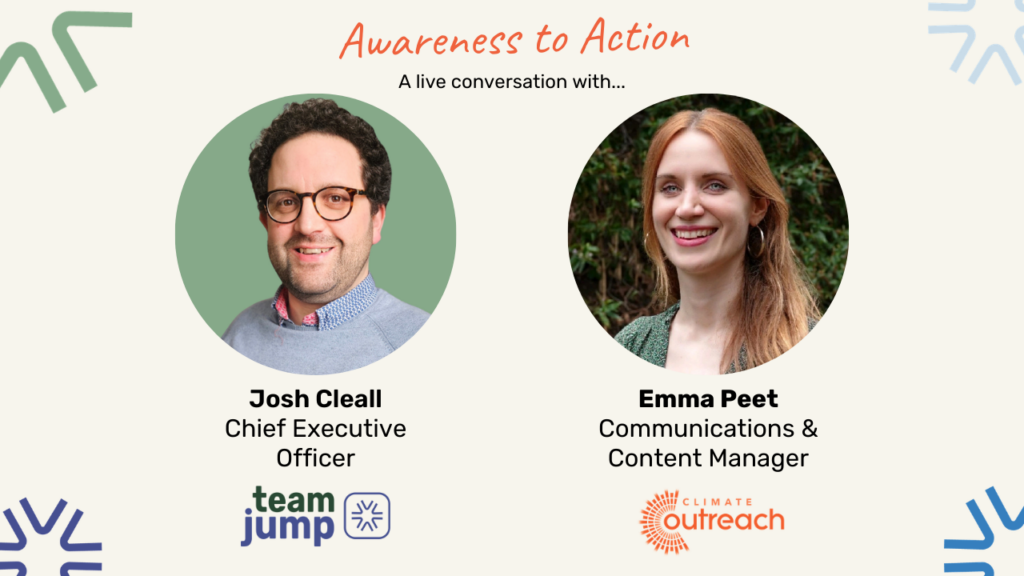


Environmental communications can often be the deciding factor between long-lasting behaviour change or apathy. In our latest LinkedIn Livestream, we explored how to move people from awareness to action with Emma Peet, Content and Communications Manager at Climate Outreach. Together, we unpacked what works, what to avoid, and how environmental communications build trust, confidence and momentum across your organisation.
Put people first – ask questions!
Effective environmental communications begins with listening. Emma shared how Climate Outreach uses social research to understand how people think and feel before shaping any message. This approach recognises that most people already care about climate change. However, they feel busy, stretched, or unsure what action will make a difference. We also found this in our own research, which we presented in the Sustainability Engagement Trends 2026 Report.
Because of this, environmental communications should focus on agency. When you tell stories about people, place and progress, you help replace powerlessness with confidence. Invite people into a shared journey and show how their actions matter. This is the same principle we use when designing Team Jump programmes, where members see how everyday actions connect to wider sustainability goals.
Turn concern into action
A key insight from the discussion was that concern alone does not lead to action. Climate anxiety is real, but behaviour change is far more likely when people see others acting. Environmental communications excel when action feels visible, normal and achievable.
Emma highlighted the power of local and community stories. These might include cleaner streets, renewable energy projects, or people saving money through sustainable choices. When you highlight these examples, you create social proof and reduce decision paralysis. For sustainability managers, this means shifting focus away from abstract targets and towards tangible outcomes. You can see a similar approach in action in our article on engaging people with sustainability programmes, where visible progress supports long term behaviour change.
Building trust with clear environmental communications
Trust sat at the heart of the conversation. Emma explained that the messenger can matter as much as the message. People respond to environmental communications that feel empathetic, credible and passionate, even when the communicator is not a technical expert.
Language choices also matter. Terms like net zero can confuse or alienate when they are not explained clearly. Negative or judgemental messaging can also push people away. Instead, trusted environmental communications will translate goals into everyday benefits such as lower bills, healthier communities and a more secure future. Within organisations, this often means empowering colleagues and champions to share stories, rather than relying only on senior leaders.
Environmental communications that motivate action
This session reinforced a simple truth. People want to act, but they need to be communicated with, in a way that is human, hopeful and practical. When you focus on stories of progress and communicate with honesty, you can create a culture of sustainability.
If you want to turn insight into action and motivate your people through habit-forming sustainability programmes, we are ready to support you. You can request a demo of the Team Jump platform and explore how our programmes will strengthen your environmental communications and deliver measurable impact.