

In our digital age, it’s tempting to rely solely on emails, social media, or apps to engage people with sustainability. But time and time again, event marketing in the physical world proves to be a powerful complement, especially when your message is about behaviour change, community values, or climate action.
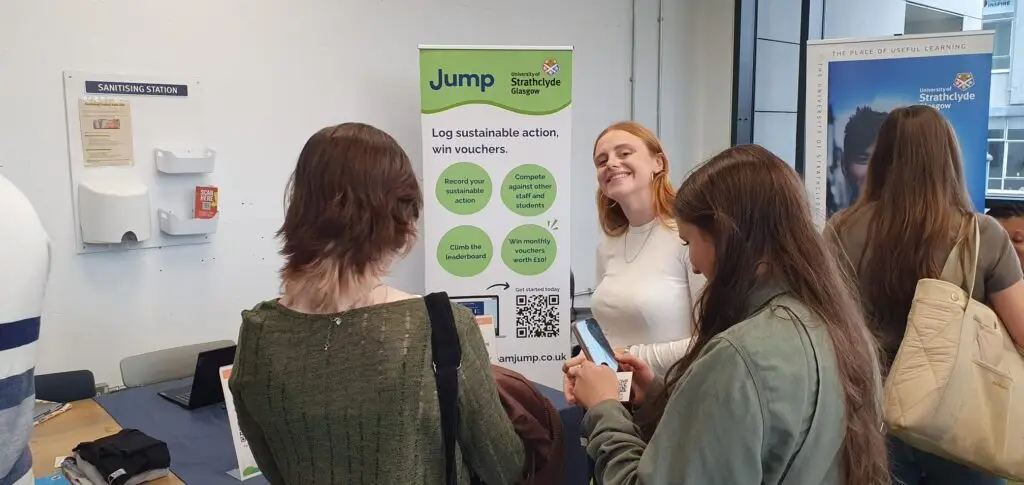
We’ve seen this first-hand through our presence at Freshers Fayres across the UK in the past month, signing up over 600 new members across our university programmes, entirely through onsite promotion. So we wanted to share our experience from over 10 years of communicating with people about sustainability, on site and in-person.
Why event marketing works for sustainability
1. Humans resonate with humans
Online posts and digital campaigns are efficient, but they lack warmth. At an in-person stand, someone can smile, hand over a leaflet, ask a question, or hear your enthusiasm. You build trust instantly. That human connection helps people feel like they’re joining a community.
2. You meet people exactly when they’re open to new ideas
Freshers Fayres, in particular, are ideal because students are arriving, exploring, and open to new commitments. That openness gives you an opportunity to introduce sustainability in a meaningful way, when their minds are primed for new habits and affiliations.
3. You stand out from “the noise
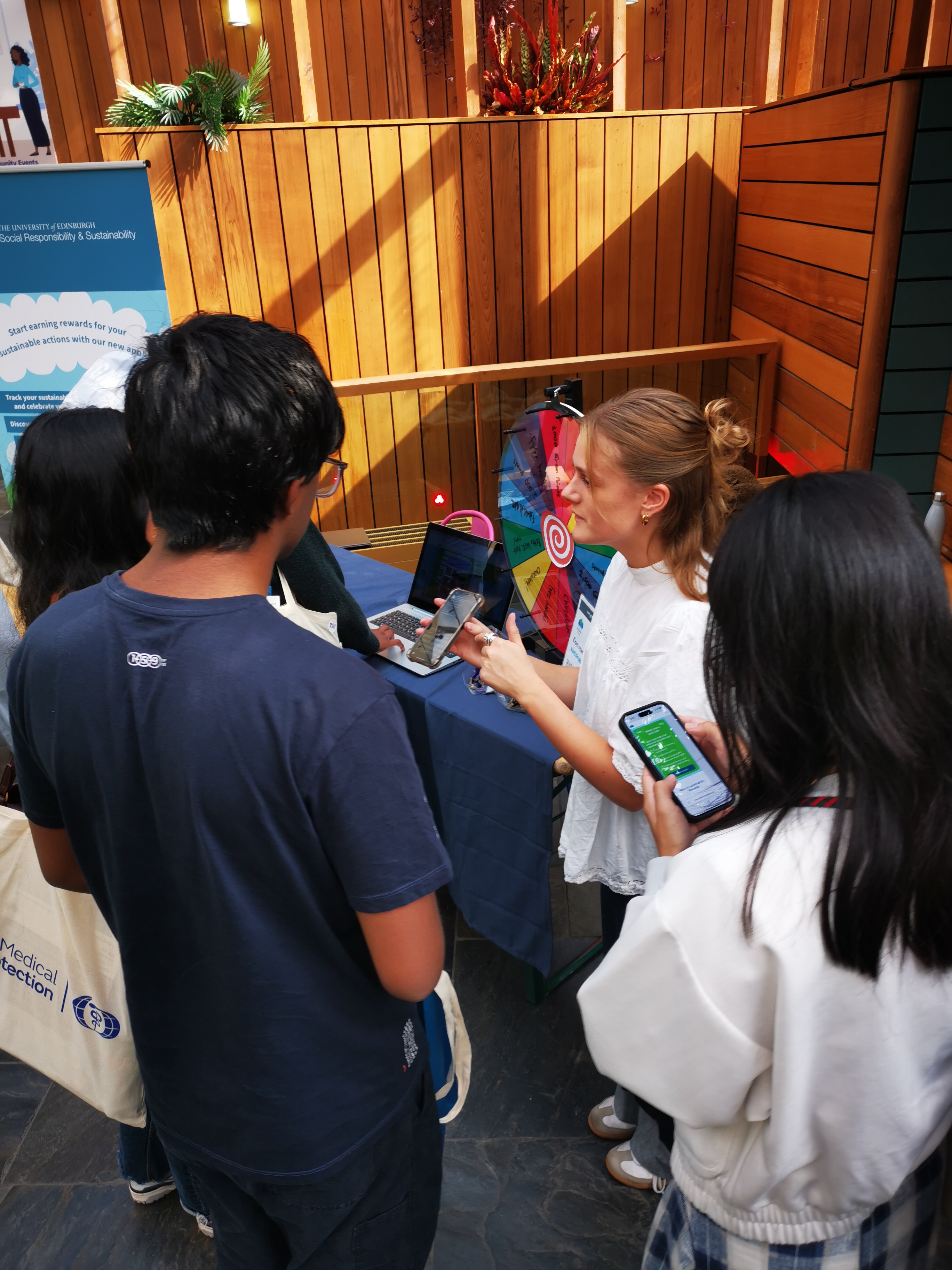
In a sea of social media ads, emails, and posters, a well-staffed, interactive stall cuts through the clutter. Passersby remember the experience of spinning a wheel, chatting with a friendly volunteer, or signing up on the spot — things you can’t replicate in a newsletter.
4. You collect immediate feedback, interest, and signups
You can answer misconceptions, address questions, and tailor your message in real time. You also get direct signals of interest (who stops, who asks, who gives their email). That feedback is gold for improving your communications long-term.
Our Experience running event marketing at Freshers Fayres
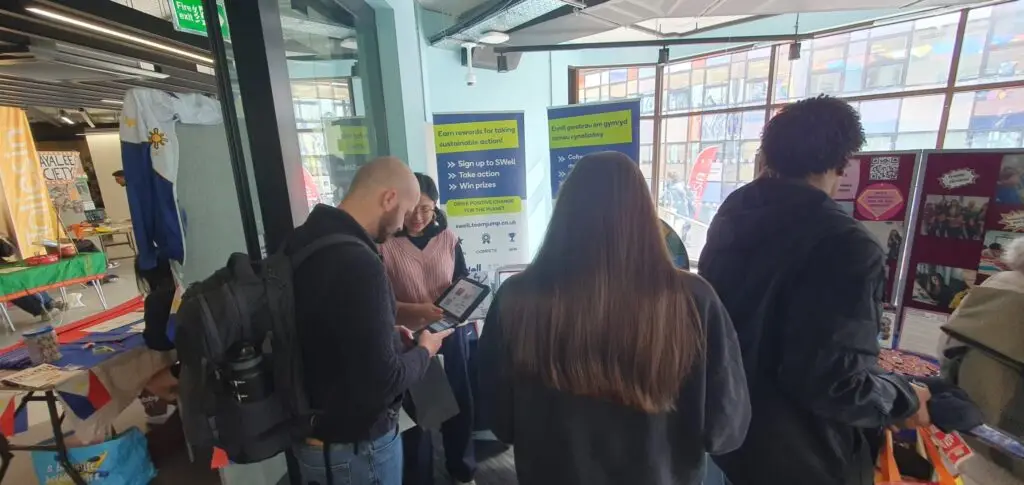
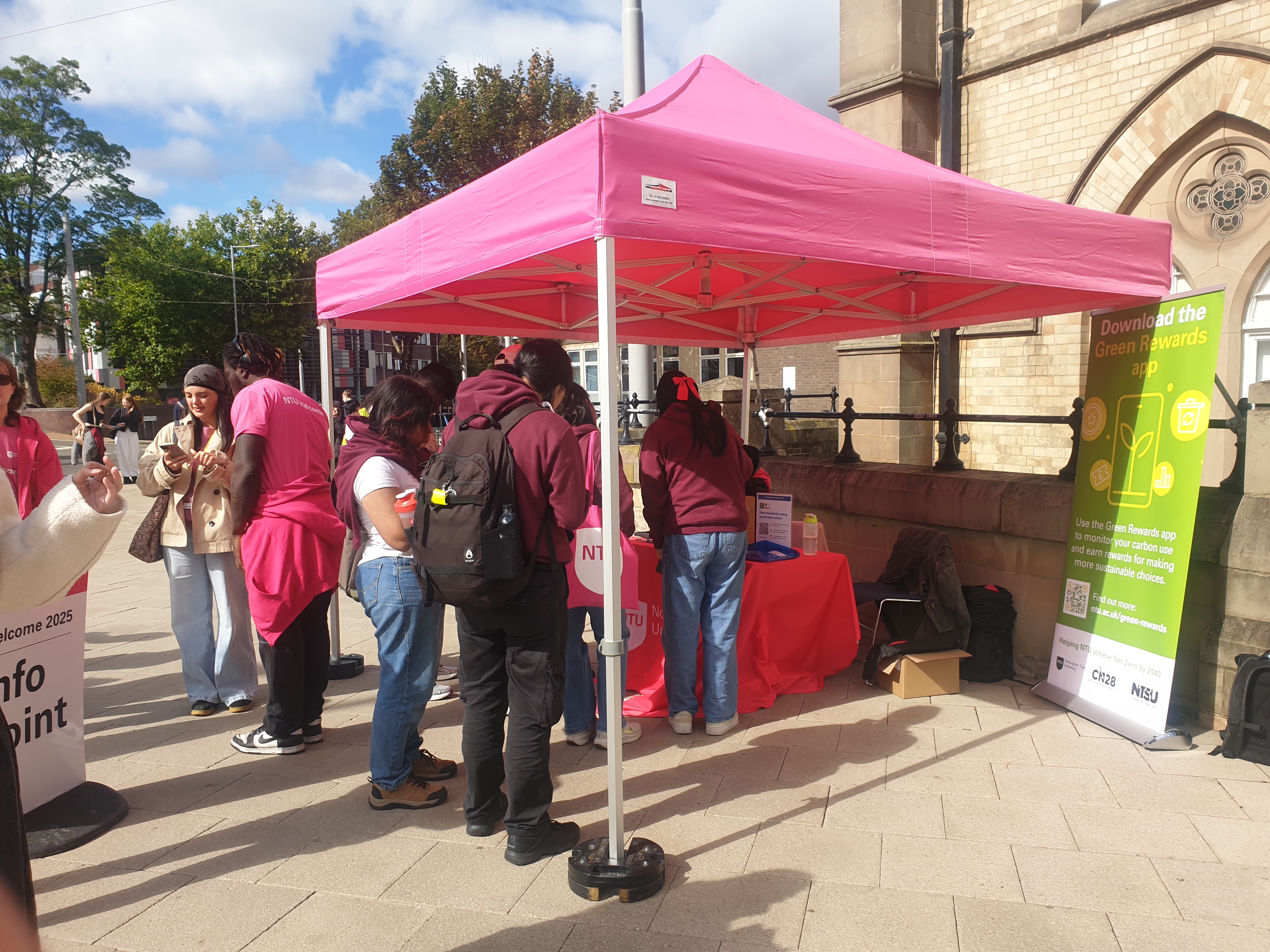
In the past few weeks, we’ve provided onsite promotion for programmes at Nottingham Trent University to Strathclyde University, The University of South Wales, Swansea University, and The University of Edinburgh. You might have noticed the trend: this is a service that we offer to all our clients, but universities in particular use this service to promote their programme to new students at Freshers Fayres. Together across these events, we signed up more than 600 members.
Here’s what made those stalls successful:
- Visibility — We secured prime spots in high-footfall halls or entrances.
- Engagement tools — We used a prize wheel game (spin to win a small reward) which drew people in and gave us an entry point for conversation.
- Proactive volunteers — Our team didn’t wait for people to approach. They stepped out, asked simple questions (“Are you interested in sustainability?”), and gently steered toward a short pitch.
- Clear messaging — We were clear that the programme was free to join and use, because the university was passionate about sustainability.
- Follow-up mechanics — Students could sign up by scanning a QR code on our banners, and if they had trouble with signal or Wi-Fi, we had tablets on hand to help them sign up.
This doesn’t tell the whole story of course. Our team of engagement experts have had years of experience practicing and learning the best ways to motivate and empower people to take climate action. We’ve had pre-event briefings and a post-event debriefs to keep our message clear and focused. We’re also all genuinely passionate about the environment, which helps to make that human connection.
How to run a successful sustainability stall: best practices for event marketing
Here’s a step-by-step guide you (or your organisation) can use when planning event marketing for sustainability outreach:
1. Choose a prime location
- Aim for entrances, crossroads, student union foyers, or central halls
- Watch foot traffic patterns ahead of time (e.g. when students move between lectures)
- Negotiate with event organisers early to get the best spot
2. Prepare your stall layout
- Use tall backdrops or banners so your message is readable from a distance
- Keep your table tidy; avoid clutter
- Use bright colours, consistent branding, and simple fonts
- Include one visual “hook” (e.g. a compelling statistic, bold phrase, or image)
3. Create an eye‑catching game or draw activity
- A prize wheel works well: segments can correspond to small prizes (stickers, seeds, pens)
- Use quizzes, “spin & win,” guess-the-stat or sustainability trivia
- The goal is to create a low-effort, fun interaction that opens a conversation
4. Staff proactively
- Train volunteers to step off the table and reach out (don’t wait)
- Equip them with two-minute and five-minute pitches
- Use open questions (e.g. “What’s one thing you care about — energy, plastic, food waste?”)
- Be genuine, not overly salesy
5. Enable instant signups
- Use tablets, laptops, or printed forms
- Keep the signup process short — name, email, perhaps university course
- Offer “instant reward” (e.g. a sticker, badge) for signing
6. Follow up
- After the event, send a welcome email thanking them
- Provide their first “action” to complete (e.g. pledge, quiz, small eco‑task)
- Keep momentum with regular communications (but don’t overwhelm)
7. Evaluate and adapt
- Track metrics: how many stopped by, how many signed up, what questions came up
- Debrief with your team afterward — what went well? What surprised you?
- Use feedback to improve your next event
Why going “old school” matters for event marketing
In-person event marketing gives you something digital cannot: authenticity and trust. When a person sees your face, senses your enthusiasm, watches you spin the wheel with someone else, they feel involved and welcome. That emotional component motivates action.
Also, face-to-face conversations let you sense hesitation or misconceptions and respond immediately. Someone might worry “Is this time-consuming?” or “Is it just pledges without impact?” You can clarify then and there.
Moreover, emotionally resonant stories tend to stick. You can share a quick anecdote (“One student saved won over £50 in vouchers in a year”) or a success story in conversation, which often resonates more than a statistic on a page.
Bringing it all together: event marketing as a sustainability tool
When you lean into event marketing with the right strategy — compelling visuals, engaging games, proactive staff, prime location, and instant signups — you don’t just recruit names, you spark intentions. You help people move from curiosity into commitment.
Our Freshers Fayre efforts at Nottingham Trent, Strathclyde, University of South Wales, Swansea, and Edinburgh showed that approach in action. Over 600 students across those events joined their university’s Team Jump programme and began taking sustainable actions.
How Team Jump can help
There are many ways you can get people excited to take climate action, and in-person events are just one of them. At Team Jump, we offer comprehensive sustainability engagement programmes that combine technology, incentives, gamification, communication and socialisation all around getting people involved with sustainability.
If you’d like our team of engagement experts to help you find the gaps in your sustainability engagement strategy, book a free sustainability engagement health-check (worth £500) with us today!