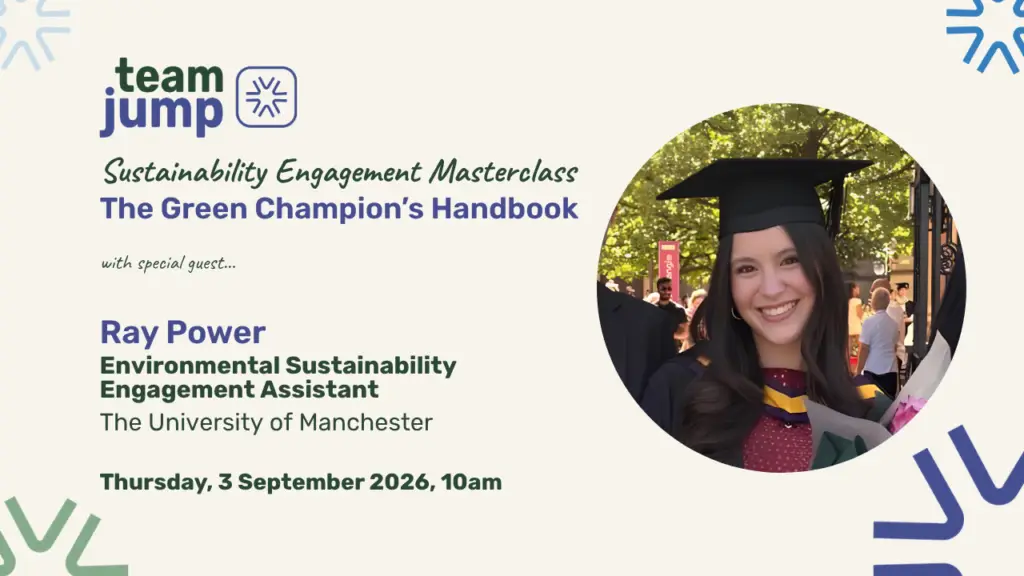


A successful Sustainability Champions Network can transform sustainability from a central team responsibility into a movement driven by people across your organisation. That was the focus of our latest Sustainability Engagement Masterclass, where Katie Rees, Engagement Director at Team Jump, spoke with Ray Power, Environmental Sustainability Engagement Assistant at the University of Manchester.
The conversation explored how Manchester has built a thriving student sustainability champions programme, the lessons learned along the way, and what other organisations can take from their experience.
Watch the full webinar below.
Why a Sustainability Champions Network Works
Many sustainability teams face the same challenge. They have ambitious goals but limited capacity to engage everyone across their organisation.
A Sustainability Champions Network helps solve this problem by creating a group of motivated people who can influence their peers and amplify sustainability messages. At the University of Manchester, around 50 student champions work across focus areas including nature, sustainable food, travel and transport, carbon reduction, recycling and biodiversity.
What makes the approach particularly effective is its flexibility. Students can explore different sustainability topics throughout the year while bringing their own skills, interests and creativity to campaigns.
As Ray explained during the webinar, students do not simply receive instructions. Instead, they are empowered to design and deliver their own engagement activities, creating a stronger sense of ownership and motivation.
This approach reflects a wider principle we often see in successful sustainability programmes. People are far more likely to act when they feel they have agency and can shape the solutions themselves. That is why employee and student engagement programmes often achieve greater long term impact than awareness campaigns alone.
Creating a Sustainability Champions Network That People Want to Join
Recruiting champions is only the first step. Keeping them engaged throughout the year requires careful planning and support.
One important lesson from Manchester’s programme is the value of building community from the very beginning. In-person inductions help students meet their peers, understand the university’s sustainability goals and begin collaborating immediately. These sessions create a sense of belonging that continues throughout the programme.
The university also provides clear expectations through a working charter, regular communication and structured support. At the same time, students retain considerable freedom over the campaigns they choose to deliver.
This balance between guidance and autonomy is critical. If champions feel overly managed, enthusiasm can quickly disappear. However, when people are trusted to take ownership while receiving appropriate support, engagement tends to remain much higher.
The webinar also highlighted the importance of recognising contributions. Students are motivated not only by environmental impact but also by opportunities to build new skills, gain leadership experience and strengthen their future employability.
Turning a your Network Into Real Action
The strongest takeaway from the session was that a Sustainability Champions Network should focus on action rather than awareness alone.
During the academic year, Manchester’s student champions delivered a wide range of campaigns. These included biodiversity walks, sustainable travel initiatives, sustainability quiz events and fundraising activities supporting the British Hedgehog Preservation Society.
While these projects may seem modest individually, their collective impact is significant. Each campaign creates conversations, reaches new audiences and helps establish sustainability as a visible part of campus life.
Perhaps most importantly, champions act as trusted messengers. Students often respond more positively to peers than to institutional communications. This peer-to-peer approach helps sustainability messages travel further and creates social norms that encourage wider participation.
We see the same effect across many Team Jump programmes. When sustainability becomes something people talk about with colleagues, classmates and friends, participation grows naturally. This is why structured engagement programmes can be such a powerful companion to a champions network, helping maintain momentum and measure impact at scale.
Whether you work in higher education, local government or business, the principles remain the same. Give people a voice, provide support, celebrate success and create opportunities for meaningful action. When you do, your Sustainability Champions Network can become one of the most effective tools in your sustainability strategy.
Ready to Build Your Own Sustainability Champions Network?
If this webinar has inspired you to develop a Sustainability Champions Network within your university, college or organisation, we have created a practical resource to help you get started.
Download our Student Champion’s Handbook, which brings together proven strategies for recruiting champions, maintaining engagement, supporting behaviour change and measuring impact. The handbook includes practical guidance for organisations at every stage, whether you are launching your first network or looking to strengthen an existing programme.
Alternatively, if you would like tailored advice, book a free Sustainability Engagement Health Check with our team. During this consultation, we will review your current engagement approach, identify opportunities to increase participation and provide practical recommendations to help you achieve your sustainability goals.