

Turning awareness into action on urban greening
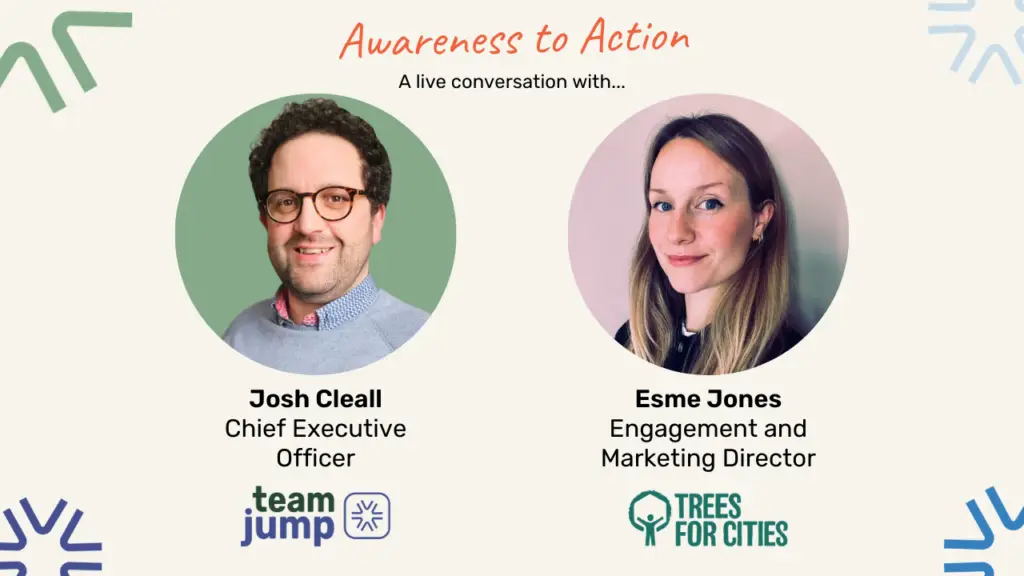
Urban greening will shape the future of towns and cities across the UK. In our latest LinkedIn Live, Awareness to Action, our CEO Josh Cleall spoke with Esme Jones, Engagement and Marketing Director at Trees for Cities, about why urban greening matters and how you can turn concern into meaningful action.
With more than 80 percent of people in the UK living in urban areas, green spaces are no longer just a luxury but essential infrastructure. Throughout the conversation, Esme shared practical insight into how trees and green spaces support climate resilience, wellbeing and community connection, and why engagement is key to making urban greening work.
Watch the LinkedIn Live: Urban Greening from Awareness to Action
What is urban greening
Urban greening is the process of bringing nature back into towns and cities. This includes planting street trees, creating parks, adding green walls and rethinking how public spaces are used.
However, it’s not just about aesthetics. As Esme explained, cities are getting hotter, flooding is becoming more common and air quality continues to damage health. Urban greening helps address these challenges by working with nature rather than against it.
From a behaviour change perspective, urban greening works best when people clearly understand the impact of their actions. This is why visible and local outcomes matter. Our approach to behaviour change in sustainability engagement focuses on helping people see how everyday actions contribute to collective impact.
What are green spaces
Green spaces are areas within urban environments where nature is present and accessible. This includes parks, community gardens, school grounds and tree-lined streets.
During the livestream, Esme highlighted that green spaces function as critical urban infrastructure. Trees clean the air, reduce surface water flooding and support biodiversity. At the same time, green spaces improve wellbeing by helping people feel calmer and more connected to their communities.
Importantly, green spaces do not need to be large. Urban greening encourages creativity, whether through planters on pavements, rain gardens or trees planted in unexpected places. This links closely to how we design effective sustainability campaigns that engage people through visible and achievable action.
Why are green spaces important
Green spaces are essential because they support both environmental and social resilience. Trees absorb carbon, cool urban heat islands and help manage excess rainfall. They also support mental health and encourage people to spend time outdoors.
Esme described trees as having superpowers because they quietly protect us every day. Yet many people only recognise their value when they see the difference locally, such as a cooler street or a flood-free playground.
This is where engagement becomes critical. When people plant a tree or care for a local green space, awareness becomes personal. Hopeful storytelling and clear feedback help sustain action over time, which we explore further in our article on gamification and sustainability engagement.
How much of the UK is green space
Although the UK is often seen as a green country, access to green space is uneven. While rural areas are rich in nature, many towns and cities suffer from low tree cover.
Over 80 percent of people in the UK live in urban areas, and the communities most exposed to air pollution, flooding and heat often have the least access to green spaces. Trees for Cities focuses on these areas of low tree equity, ensuring urban greening delivers benefits where they are needed most.
This approach reflects our belief that sustainability engagement must be inclusive. Urban greening succeeds when people feel ownership of their local environment and understand how everyday actions add up.
Urban greening turns complex climate challenges into practical action. When people can see, feel and shape change around them, engagement becomes part of everyday life.
If you want to motivate people in your organisation or community to take positive climate action, we will help you build a programme that turns awareness into action. Request a demo and see how Team Jump will support engagement, behaviour change and collective impact.