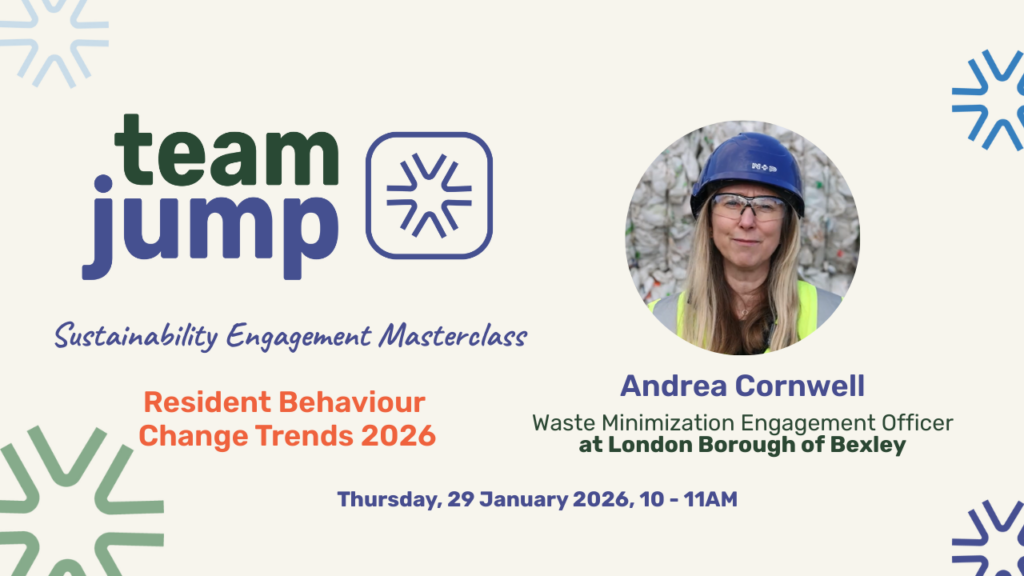


With recycling targets tightening and public expectations rising, the future of waste management in the UK depends on a change in both infrastructure and behaviour. That was the focus of our recent Sustainability Engagement Masterclass, where local authority officers from across the country joined Team Jump and Bexley Council to explore what’s working, what isn’t, and where behaviour change can make the biggest difference.
Why Waste Management in the UK Must Focus on People
Current challenges in waste management in the UK go beyond collection logistics. Despite strong public concern about plastic pollution and landfill, only a small proportion of residents feel confident about what they can actually recycle. As highlighted in recent WRAP and DEFRA data, awareness remains high but confidence and capture rates lag behind.
This mismatch matters. If residents aren’t sure what to do, they often do nothing. And that means missed targets, rising contamination, and increased costs for councils.
Behaviour change bridges this gap. From prompts and pledges to gamification and financial incentives, councils across the UK are starting to embed behaviour change techniques into their waste strategies.
What the Data Tells Us
Team Jump’s recent survey of over 2,000 residents reveals three key barriers to sustainable waste behaviours: competing priorities, lack of knowledge, and limited time.
At the same time, motivations remain strong. The majority of residents feel a moral or ethical responsibility to act, while protecting nature and saving money also ranked high. Financial incentives, in particular, emerged as the most effective motivator, reflecting the pressure of the ongoing cost-of-living crisis.
Lessons from Bexley Council
Bexley has led the way in waste management in the UK, with a proactive approach that combines legislation, community engagement, and hands-on support. The council’s initiatives span:
- Door-to-door visits and local events
- Simpler Recycling pilots
- Clearer online guidance and A–Z recycling directories
- School workshops through the long-running Schools Waste Action Club
- Food and textiles workshops focused on reducing residual waste
Bexley’s focus is on consistency, clarity, and communication. Their Green Points platform, delivered in partnership with Team Jump, plays a key role in rewarding residents for sustainable actions, providing education through quizzes and tips, and supporting long-term behaviour change.
They’ve also launched reuse shops, repair cafés, and accredited upcycling programmes, demonstrating that waste management in the UK can be creative, inclusive, and community-led.
How Behaviour Change Sustains Impact
Sustainable change needs to last. That’s why Team Jump programmes focus on habit formation over one-off campaigns. In follow-up surveys, 95% of our programme members say they understand more about the environmental impact of their behaviours, and over 90% report that sustainable routines have become part of their daily lives.
Sustained engagement, through competitions, nudges, and community building, ensures that waste reduction becomes the norm, not the exception.
A People-First Future for Waste Management in the UK
If the UK is to meet its environmental goals, waste management must become more human. Councils can’t rely solely on bins, signage, or infrastructure. Instead, the future lies in creating strong communications, clear guidance, and personal connections that help residents understand, act, and stay engaged.
Team Jump works with councils across the UK to design engagement programmes that drive results. Whether you want to reduce food waste, tackle contamination, or boost participation in new recycling systems, we’ll help you create a plan that works for your community.
Ready to see how it could work for your area? Book a demo now.