

Why Environmental Champions need Support
Environmental champions don’t appear from nowhere. They might be people who like to go for a walk at the local park, or worry about the future they’re leaving for their children. At the moment, they might not have the resources to take action, but they will appear when you make climate action visible and local.
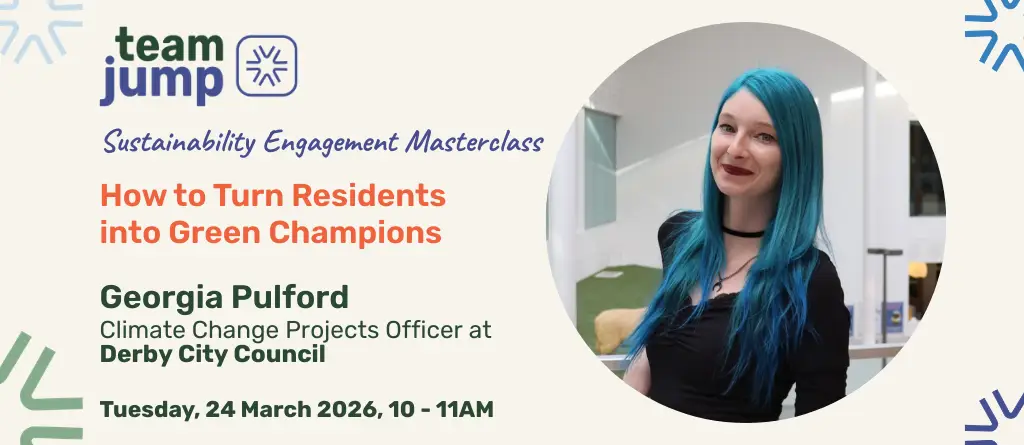
In this Sustainability Engagement Masterclass, Derby City Council’s Georgia Pulford and our very own Engagement Director, Katie Rees, show exactly what that looks like in practice. Residents are far more likely to act when sustainability feels relevant to daily life, easy to start, and connected to the places they care about.
In our latest webinar, Derby City Council shows how they are helping residents take practical action through their Green Rewards programme, the Green Home Guide, regular communications supported by us, and community-led projects.
How Environmental Champions can take Local Action
One of the strongest lessons from our engagement masterclass is that environmental champions do not need to begin with huge lifestyle changes. They just need simple actions that feel achievable.
Instead of focusing only on carbon, Derby’s engagement programme connects climate action to lower bills, healthier homes, stronger communities, and greener neighbourhoods. People are more likely to stay engaged when they can see a benefit in their own street, home, or routine.
Katie also highlights the value of making action repeatable. When residents log small activities each week, they start to build habit-forming behaviour. Over time, these resident environmental champions stop feeling like they are “helping out now and then” and start incorporating sustainability into their
If you want to see how this kind of resident programme can work in practice, our Derbyshire Green Rewards case study offers a useful example of how councils can connect education, rewards, and measurable impact.
Communications and Consistency
Georgia explains that Derby has shared Green Rewards messaging every week across social media. That steady drumbeat helps residents recognise the programme, trust it, and remember to come back. Katie builds on that point by showing why visibility matters so much. She states, “When people see others taking part, they are more likely to join in themselves.”
This is where councils can create a domino effect from the work they already do. A new food waste service, a biodiversity project, a cycling initiative, or a local event can all become opportunities to grow your environmental champion network. Instead of launching every message from scratch, you can link sustainability engagement to activity that is already happening across the council.
That idea is also at the core of what we do here at Team Jump. Our Behaviour Change Model is built around making actions easy, accessible and visible. We also have this blog post about Engaging the Silent Majority Around Sustainability that focuses on the challenge of turning good intentions into action.
Environmental Champions Create Social Movements
Another standout theme from this sustainability engagement masterclass is the power of community. When sustainability is something you can discuss (or even just see), it becomes a part of your daily life.
The ward competitions in Derby are a strong example. Residents were earning points, while helping biodiversity improvements in their area, including spring bulb planting and new pocket parks. That kind of visible change, creates something bigger than a one-off campaign.
This matters because people often want to join something that feels active and hopeful. An environmental champion programme will grow faster when it celebrates conversations as well as actions. That could mean sharing photos, promoting local success stories, or helping volunteer groups spread the word in their own communities.
For more ideas on what strong engagement looks like across different sectors, Team Jump’s sustainability success stories and Impact Report 2025 are worth exploring.
From champion to change
You can’t expect every resident to become an expert overnight. But you can help more people take the first step, then make that step easy to repeat. After that, they might get their friends involved and before you know it, you have a community of champions.
When you combine education, communications, visibility, and community-led momentum, you create the conditions for environmental champions to thrive. Once they do, they help spread your message further than any single campaign can.
If you are thinking about how to build that kind of programme in your own community, Team Jump’s Sustainability Engagement Trends 2026 and guide to how our programmes work will give you a useful next step.
And if you are ready to explore what this could look like for your residents, you can book a demo with Team Jump.